
Loading your cart…
Moringa
Moringa oleifera Lam
- Hindi
- सहजन
- English
- Drumstick
Content reviewed by Dr Kanhaiya L Yadav, Doctor on November 9, 2026 Last updated November 9, 2026
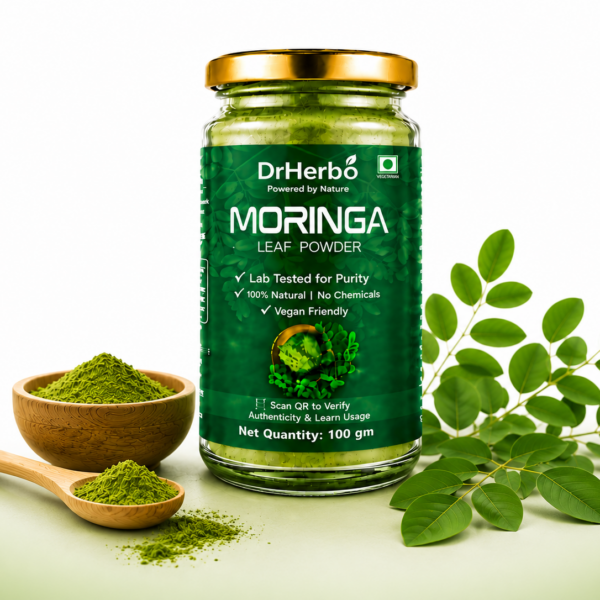
Moringa Leaf (Moringa oleifera), commonly known as सहजन, is a traditional leafy botanical widely used in Indian food preparations. Its leaves naturally contain vitamins, minerals and plant compounds. DrHerbo Moringa Leaf Powder is prepared using selected moringa leaves, carefully dried and processed into powder.
Overview
Moringa (Moringa oleifera)
Introduction
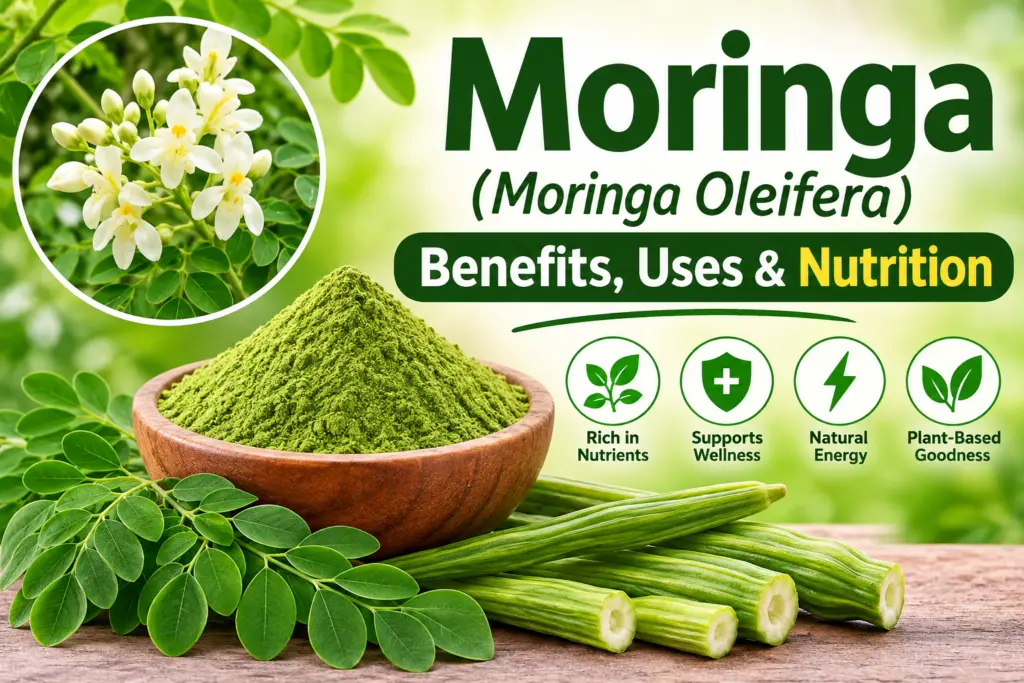
Moringa (Moringa oleifera), commonly known as the Drumstick Tree, is a fast-growing plant belonging to the family Moringaceae. Native to the Indian subcontinent, it is widely cultivated in tropical and subtropical regions around the world.
Moringa has a long history of traditional food use in India and other regions. Different parts of the plant, including its leaves, pods, flowers and seeds, are used in traditional food preparations. The leaves are particularly popular because they can be consumed fresh, cooked or dried and ground into a fine green powder.
Moringa is valued as a plant-based food ingredient because its leaves naturally contain protein, dietary fibre, vitamins, minerals and various plant compounds.
Botanical Information
- Common Name: Moringa, Drumstick Tree
- Botanical Name: Moringa oleifera
- Plant Family: Moringaceae
- Plant Type: Perennial, fast-growing tree
- Origin: Indian subcontinent
- Commonly Used Plant Part: Leaves
- Other Traditionally Used Parts: Pods, flowers and seeds
- Common Ingredient Form: Fresh leaves, dried leaves and leaf powder
Plant Description
Moringa is a small to medium-sized tree with a relatively slender trunk and spreading branches. It has delicate, compound leaves made up of numerous small, oval-shaped leaflets.
The tree produces fragrant, pale-coloured flowers and long, slender seed pods commonly known as drumsticks. Its seeds are found inside the mature pods.
The leaves are harvested for culinary use and can be dried under suitable conditions before being ground into powder.
Moringa Leaves and Their Nutritional Composition
Moringa leaves contain a range of naturally occurring nutrients and plant compounds. Their nutritional composition may vary depending on the growing environment, soil conditions, harvesting stage, processing method and storage.
The leaves are known to contain:
- Plant-Based Protein: A natural source of plant protein.
- Dietary Fibre: Naturally present in the leaves.
- Vitamins: Includes naturally occurring vitamins such as provitamin A carotenoids and vitamin C in fresh leaves.
- Minerals: May contain calcium, potassium, iron and other minerals.
- Plant Compounds: Contains naturally occurring polyphenols, flavonoids and other phytochemicals.
- Chlorophyll: The green pigment naturally present in leaves.
Nutrient levels can differ between fresh and dried leaves. Drying and storage conditions can also affect the final nutritional composition.
Traditional Uses of Moringa
Moringa has traditionally been used as a food ingredient in various Indian and international cuisines.
Common traditional food uses include:
- Adding fresh leaves to vegetables and curries.
- Preparing soups and broths.
- Cooking leaves with lentils and other ingredients.
- Using drumstick pods in traditional vegetable dishes.
- Preparing dried leaf powder for food and beverage recipes.
- Adding Moringa powder to smoothies and other homemade preparations.
These are traditional culinary uses and do not establish medical benefits.
What Is Moringa Leaf Powder?
Moringa Leaf Powder is made by harvesting Moringa leaves, cleaning them, drying them under appropriate conditions and grinding them into a fine powder.
The powder has a naturally green colour and a characteristic herbal taste. It can be used as a food ingredient in different recipes.
Common applications include:
- Mixing into water or other beverages.
- Adding to smoothies and juices.
- Mixing into soups and vegetable preparations.
- Adding to dough and homemade food recipes.
- Using in selected traditional food preparations.
The taste, colour and texture may vary depending on the leaves and processing conditions.
Moringa in Everyday Food Preparation
Moringa leaf powder can be incorporated into everyday food preparations in small quantities according to personal food preferences.
It can be combined with ingredients such as fruits, vegetables, yoghurt, soups and smoothies. It may also be added to cooked food preparations.
Moringa powder is a food ingredient, not a replacement for a varied and balanced diet.
Quality and Processing
The quality of Moringa Leaf Powder depends on the quality of the leaves and the care taken during harvesting, cleaning, drying, grinding and packaging.
Important quality considerations include:
- Correct botanical identification of the plant.
- Use of suitable plant parts.
- Proper cleaning before processing.
- Appropriate drying and moisture control.
- Hygienic grinding and handling.
- Food-grade packaging.
- Protection from moisture, heat and direct sunlight.
- Appropriate quality checks and traceability.
The colour, aroma and texture of the powder may naturally vary between batches.
DrHerbo Moringa Powder
DrHerbo Moringa Powder is made using Moringa leaves as the ingredient source. The product is available as DrHerbo Moringa Powder 100g Glass Jar.
For complete product-specific information, including ingredients, net quantity, directions for use, storage instructions and precautions, always refer to the product label and product page.
Related DrHerbo Product: DrHerbo Moringa Powder 100g Glass Jar.
Storage and Handling
To maintain the quality of dried Moringa leaf powder:
- Store in a cool and dry place.
- Keep the container tightly closed after use.
- Protect the powder from moisture and direct sunlight.
- Use a clean, dry spoon when handling.
- Follow the best-before date and storage instructions printed on the product packaging.
- Do not use the product if its packaging is damaged or the contents show unusual changes in smell, appearance or texture.
Precautions
Moringa is a food ingredient, but it may not be suitable for everyone.
- Check the ingredient list before use, especially if you have a known food allergy or sensitivity.
- Start with a small food quantity if you have not consumed Moringa before.
- Consult a qualified healthcare professional if you are pregnant, breastfeeding, taking medication or managing a medical condition.
- Do not use Moringa as a substitute for prescribed medicines or professional medical advice.
- Follow the directions and precautions provided on the product label.
Different parts of the Moringa plant have different compositions. Information about the leaves should not automatically be applied to the roots, bark, seeds or other plant parts.
Frequently Asked Questions
1. What is the botanical name of Moringa?
The botanical name of Moringa is Moringa oleifera.
2. Which plant family does Moringa belong to?
Moringa belongs to the family Moringaceae.
3. Which part of Moringa is commonly used as food?
The leaves are commonly used as food. Pods and flowers are also used in traditional food preparations.
4. What is Moringa Leaf Powder?
It is a powder prepared by drying Moringa leaves and grinding them into a fine form.
5. Does Moringa naturally contain protein?
Yes. Moringa leaves naturally contain plant-based protein. The amount varies depending on the leaves and processing method.
6. Does Moringa contain dietary fibre?
Yes. Dietary fibre is naturally present in Moringa leaves.
7. What does Moringa powder taste like?
Moringa powder has a characteristic leafy, herbal taste. Its flavour can vary depending on processing and storage.
8. Can Moringa powder be added to smoothies?
Yes. It can be added to smoothies and other food or beverage preparations.
9. How should Moringa powder be stored?
Store it in a tightly closed container in a cool, dry place away from moisture and direct sunlight.
10. Is Moringa a medicine?
Moringa leaf powder is a plant-based food ingredient. It should not be considered a medicine or a substitute for medical treatment.
Important Information
The information on this page is provided for general educational and ingredient-awareness purposes. Traditional food uses and nutritional information do not establish that Moringa treats, cures or prevents any disease. Nutritional composition may vary depending on the plant source and processing conditions. Always read the product label and consult a qualified healthcare professional when appropriate.
Powered by Nature | DrHerbo
How it has been used traditionally Traditional use
Moringa has a long history of traditional cultivation and food use in India and other parts of South Asia. Its leaves have traditionally been consumed as a leafy vegetable and included in soups, curries and household food preparations. Dried moringa leaves are also used in powdered form in traditional food preparations.
- Used as a leafy vegetable in traditional diets.
- Used in soups and cooked food preparations.
- Used in dried leaf powder preparations.
- Used in traditional herbal food preparations.
Traditional use describes how a plant has been used over time. It is not evidence that it works.
Properties
Botanical information General botanical information
- Botanical name
- Moringa oleifera Lam
- Plant family
- Moringaceae
- Plant parts used
- Leaf, Seed, Whole plant
- Origin
- Indian subcontinent
- Other regional names
- Tamil: Murungai; Telugu: Munagaku; Kannada: Nuggekai; Malayalam: Muringa; Marathi: Shevga; Bengali: Sajina; Gujarati: Saragvo; Punjabi: Sainjna
Moringa oleifera Lam. is a fast-growing deciduous tree belonging to the family Moringaceae. It has a slender trunk, spreading branches and soft, compound green leaves consisting of several small oval leaflets. The tree produces fragrant flowers and long, hanging seed pods. It grows well in tropical and subtropical climates and is widely cultivated in India.
What research says Scientific research
Scientific research on this ingredient is limited (laboratory, animal or small studies). It does not show that the ingredient has these effects in people.
Scientific research has examined the nutritional composition, phytochemicals and biological properties of Moringa oleifera leaves. Studies have identified naturally occurring compounds such as polyphenols and flavonoids. However, many reported biological activities come from laboratory and animal studies. Human clinical evidence remains limited, and current research does not establish that moringa leaf powder can treat, cure or prevent any disease.
How it is used
Common forms: Dried plant, Fresh plant, Powder
Moringa leaves are traditionally used in cooked foods, soups and dried leaf powder preparations. In personal-care formulations, moringa leaf-derived ingredients may be included in selected botanical skincare and haircare products. The method of use depends on the formulation.
Storage
Store dried moringa leaf powder in a clean, airtight container in a cool and dry place. Keep it away from moisture, direct sunlight and excessive heat. Close the container properly after every use and follow the storage instructions provided on the product label.
Safety information
- Use properly identified and quality-controlled moringa leaf products.
- Follow the recommended serving instructions.
- Avoid spoiled, contaminated or improperly stored powder.
- Do not confuse leaf powder with moringa root or bark preparations.
Known allergies
People with a known allergy or sensitivity to moringa should avoid using this ingredient.
Possible interactions
Potential interactions between moringa leaf preparations and medicines have not been fully established. People taking prescription medicines should consult a healthcare professional before using concentrated moringa supplements.
Usage limitations
Do not exceed the recommended serving. Safety information for ordinary food use should not be assumed to establish the safety of concentrated extracts or supplements.
Pregnancy and breastfeeding
Reliable human safety information about concentrated moringa supplements during pregnancy and breastfeeding is limited. Consult a qualified healthcare professional before use.
When to consult a healthcare professional
Consult a healthcare professional if you are pregnant, breastfeeding, taking regular medication, have an existing medical condition or experience an adverse reaction after using moringa products.
Do a patch test before using any herbal ingredient on skin or hair, and stop if irritation occurs.
Related DrHerbo products Product information
Prices and stock come live from our store. Check each product's ingredient list on its page.
-
In stock
Listed in this product's ingredients
Frequently asked questions
What is Moringa?
Moringa is a plant commonly known as the Drumstick Tree. Its scientific name is Moringa oleifera. Different parts of the plant are traditionally used in food and other applications.
What is the scientific name of Moringa?
The scientific name of Moringa is Moringa oleifera Lam.
What is Moringa called in Hindi?
Moringa is commonly known as Sahjan, Sahjan Patta, or Drumstick Tree in different parts of India.
What is Moringa called in English?
Moringa is commonly called the Drumstick Tree. It is also known by names such as the Horseradish Tree and Ben Oil Tree.
Which plant family does Moringa belong to?
Moringa belongs to the Moringaceae botanical family.
Which parts of the Moringa plant are used?
The leaves, pods, seeds, flowers, and other parts of the Moringa plant have different traditional and food-related uses.
Is Moringa a natural plant?
Yes. Moringa is a naturally occurring tropical and subtropical tree cultivated in several regions around the world.
Where does Moringa originally come from?
Moringa oleifera is native to the Indian subcontinent and is now cultivated in many tropical and subtropical regions.
What is the difference between Moringa leaves and Moringa pods?
Moringa leaves are commonly used as leafy vegetables and for making leaf powder. Moringa pods are commonly known as drumsticks and are used in cooking.
What is Moringa Leaf Powder?
Moringa Leaf Powder is made by cleaning, drying, and grinding Moringa leaves into a fine powder.
What nutrients are found in Moringa leaves?
Moringa leaves contain plant-based protein, dietary fibre, vitamins, minerals, and naturally occurring plant compounds. Their nutritional composition depends on growing and processing conditions.
Does Moringa contain protein?
Yes. Moringa leaves contain plant-based protein, although the amount varies depending on whether the leaves are fresh or dried.
References
- Royal Botanic Gardens, Kew. Moringa oleifera Lam.. Plants of the World Online (POWO), Royal Botanic Gardens, Kew Botanical or scientific database
- Diana Meireles, João Gomes, Lara Lopes, Mariana Hinzmann, Jorge Machado (2020). A review of properties, nutritional and pharmaceutical applications of Moringa oleifera: integrative approach on conventional and traditional Asian medicine. Advances in Traditional Medicine, Volume 20, pages 495–515 Research study
- Food and Agriculture Organization of the United Nations (2024). Compendium of forgotten foods in Africa – A companion publication for Integrating Africa’s forgotten foods for better nutrition. Food and Agriculture Organization of the United Nations (FAO) Scientific review